Selected work01 of 04
Gesso Club
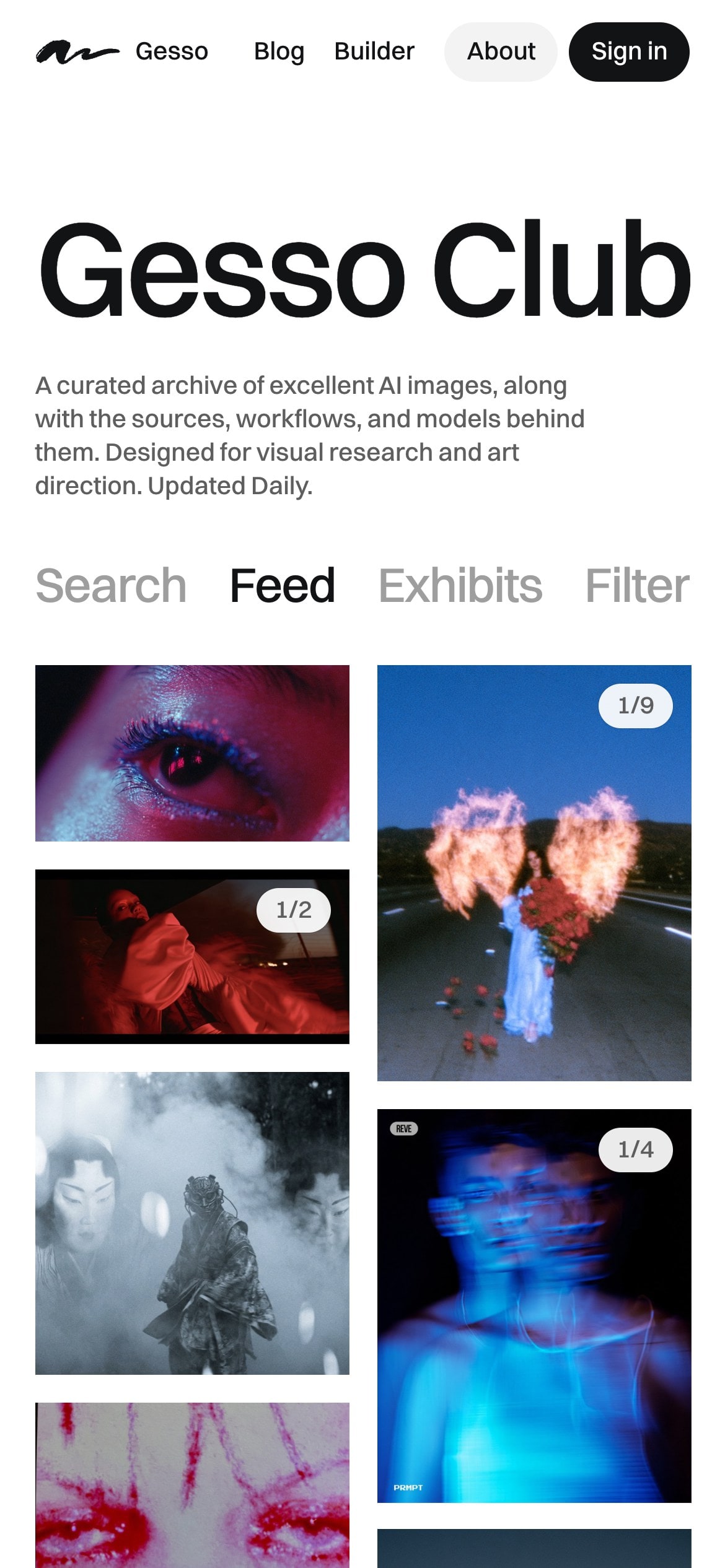
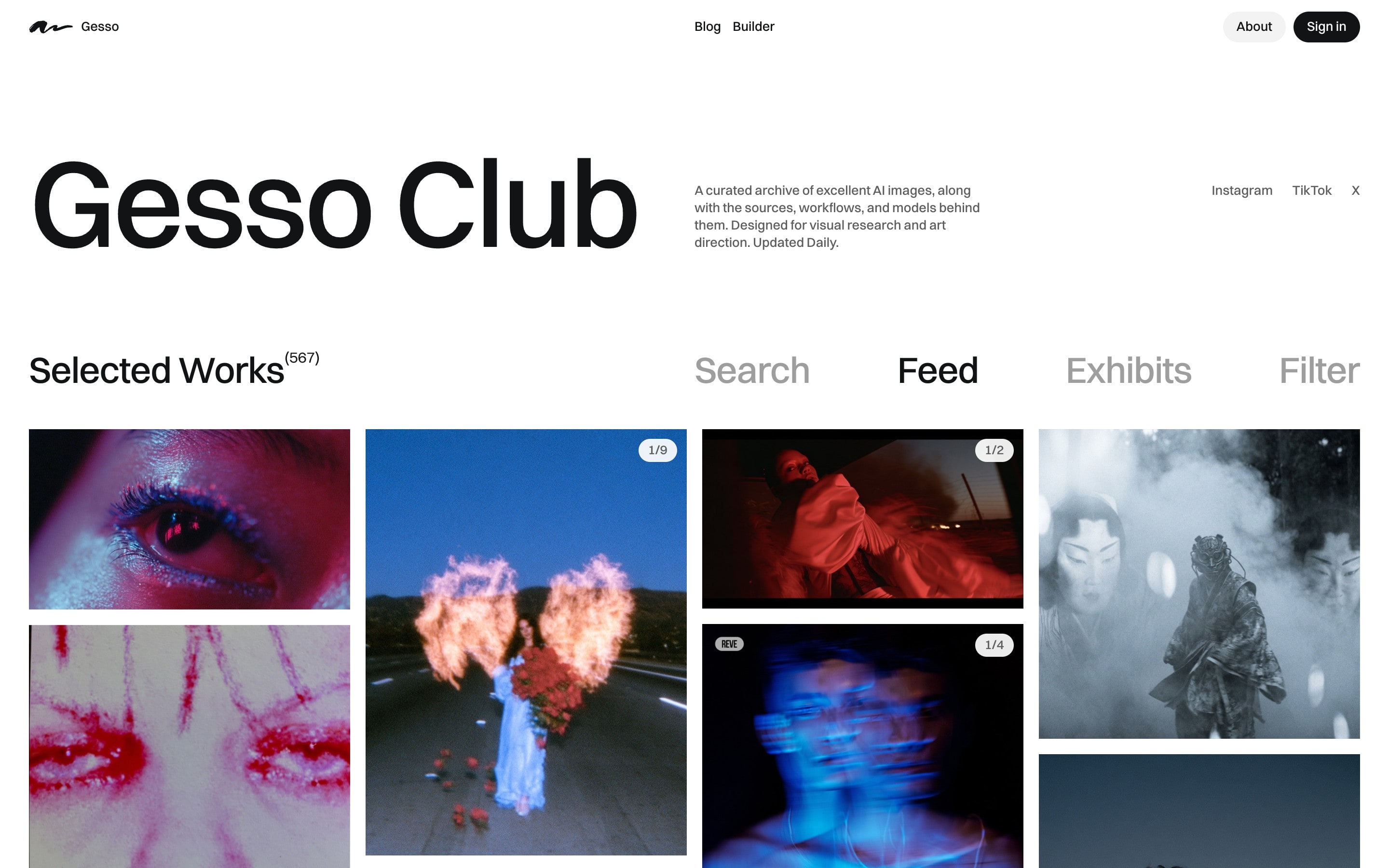
A curated archive of AI images, published with the sources, workflows and models behind them.
- Role
- Founder — design, engineering, curation
- Year
- 2026
- Status
- Live
- Stack
- Node.js, JavaScript, CSS, Server rendering, Render
Overview
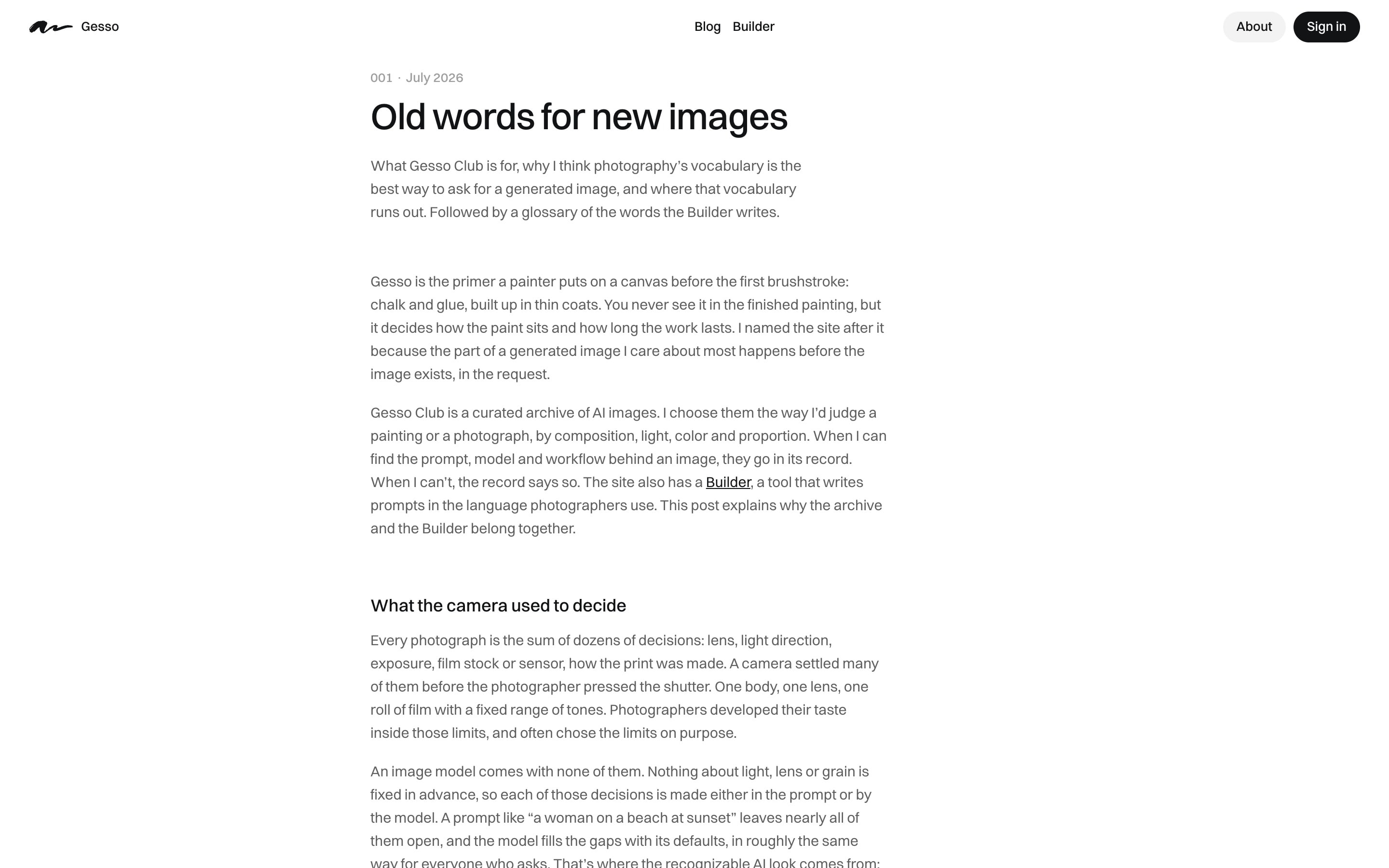
Gesso Club is an archive of excellent AI images, built for visual research and art direction. Each work is published with its record: the creator, the model and, wherever it can be found, the prompt, workflow and resources that produced it.
The name comes from the primer a painter lays down before the first brushstroke. It never shows in the finished painting, but it decides how the paint sits — the way the request decides a generated image before the image exists.
What I did
I designed and built Gesso Club end to end: the visual system, the archive, the Builder, the server and the content pipeline behind them.
I review every image that enters the archive. My own work appears in it as “User Zero”, under a stricter rule than anyone else’s: first-party records must name the model and carry a real generation record.
System
The interface is set in Switzer on a twelve-column grid with an eight-pixel baseline. Text speaks in three greys plus ink, static content stays borderless, and hairlines appear only on surfaces that float or unfold.
One easing curve decelerates everything that travels, and exits run shorter than entrances. Intermediate radii are drawn as a single continuous corner, generated rather than hand-tuned, so they read the same in every browser.
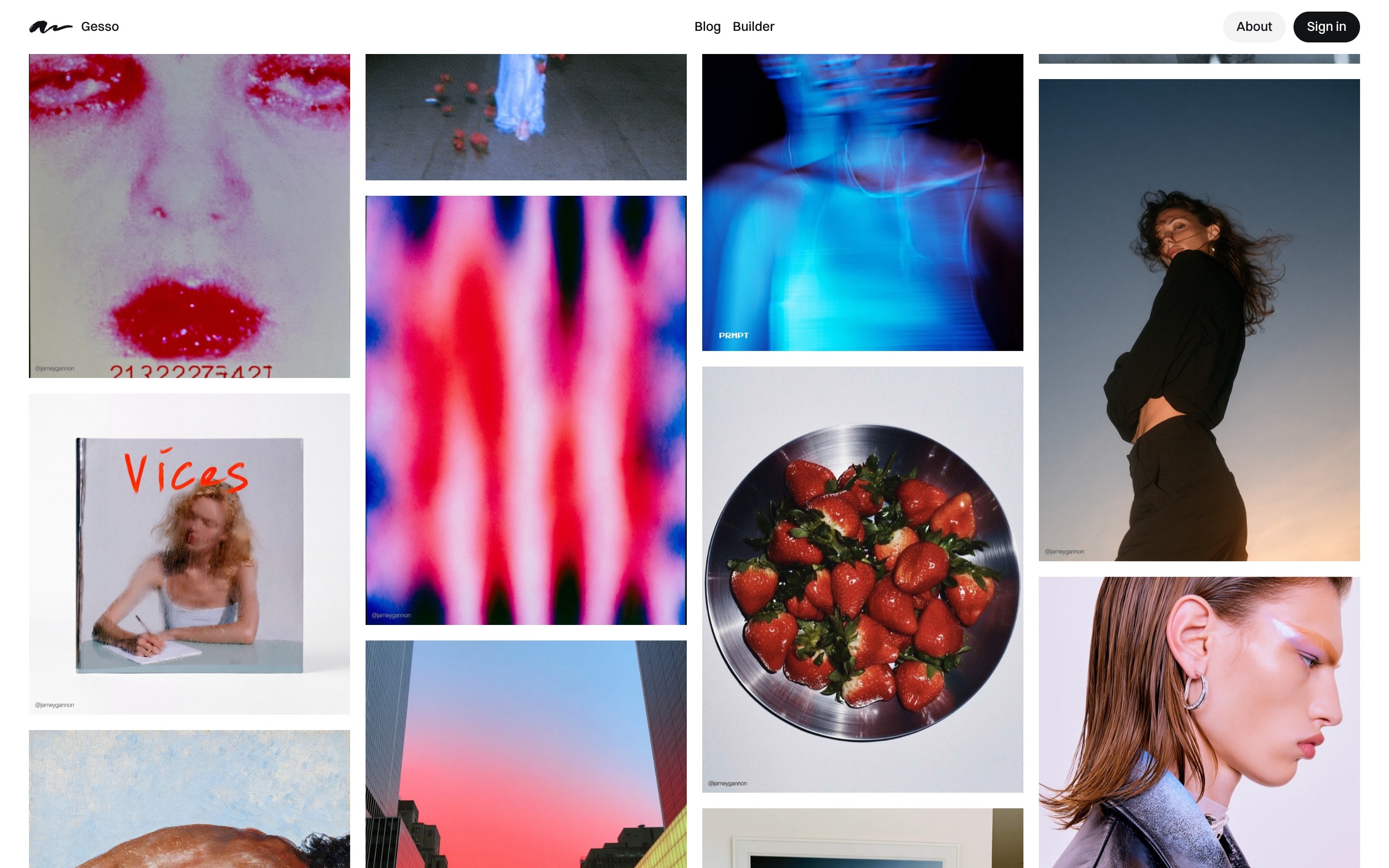
Archive
Every work is also rendered on the server as its own page, with a canonical address, a social card and structured data, so the archive reads as well to search engines and link previews as it does to people.
Series carry their own frame order, and a content contract validates every record before it can publish.
Builder
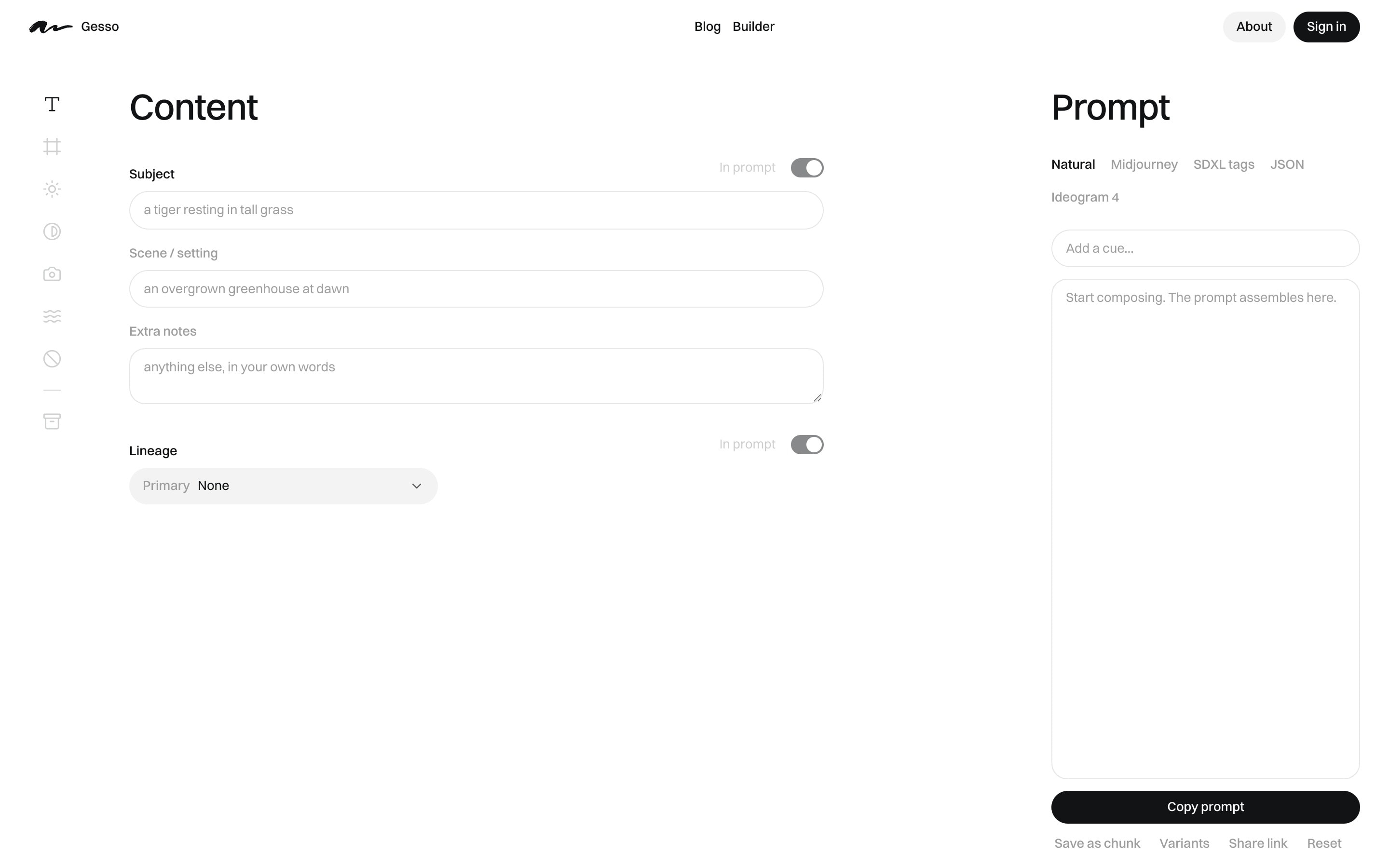
The Builder composes image prompts from photographic and painterly decisions — lighting, tone curve, grade, palette, camera, film, print — instead of lists of keywords.
One prompt can be read in several dialects, including Midjourney, SDXL tags, JSON and Ideogram 4’s structured format. It stays editable: each phrase remembers which control wrote it.